The operator console
Where Todoku's operators watch the money, settle orders the provider can't answer, reply to tickets, suspend shops and flip the kill switches, all within the contract's paths.
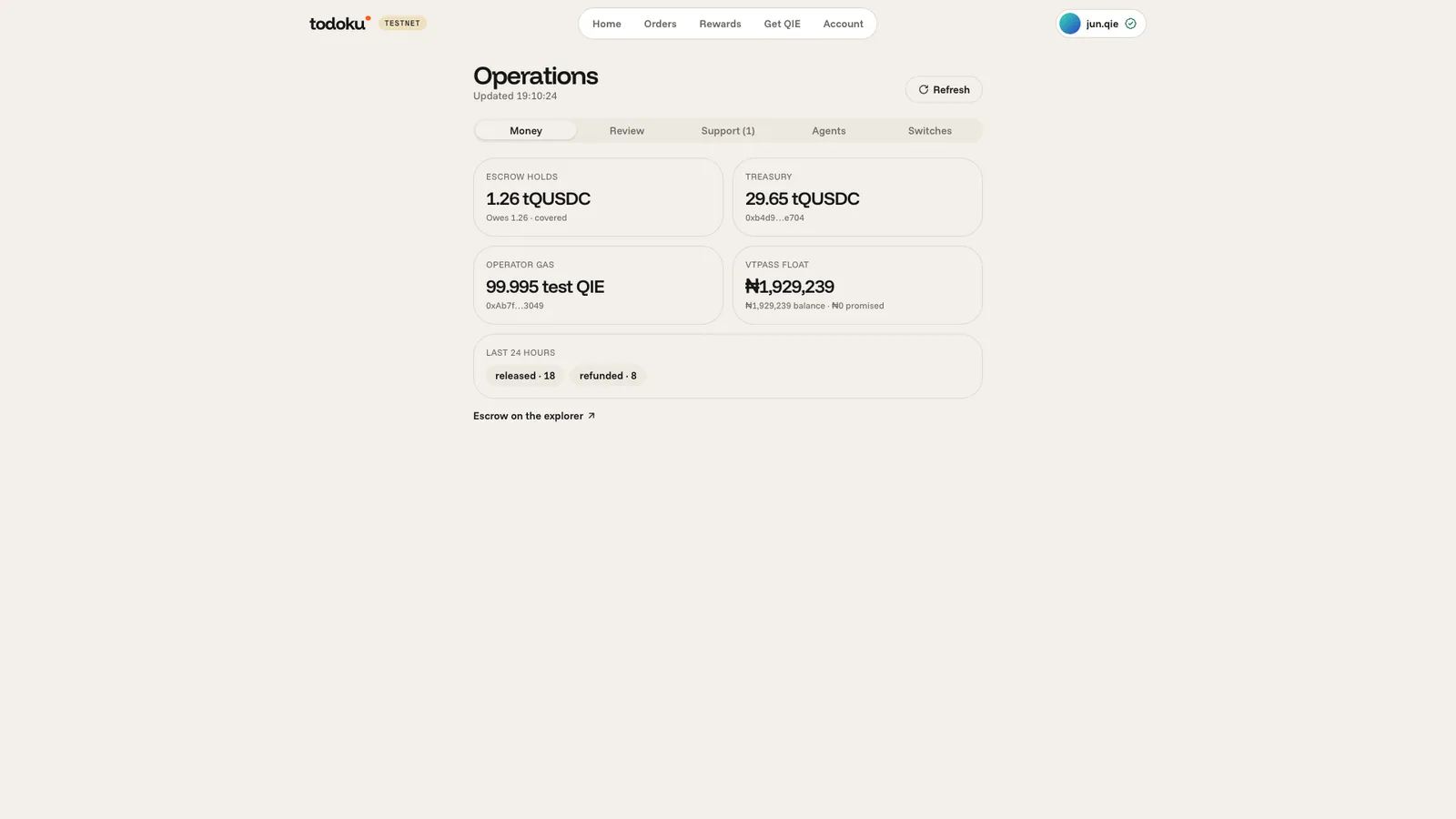
/ops opens only for wallets listed in OPS_WALLETS, after they sign in. Every /api/ops call checks both, nothing in the app links to it, and the page refreshes every 15 seconds.
| Tab | What an operator sees and does |
|---|---|
| Money | What the escrow holds against what it owes, the treasury, the operator's gas (a warning under 1 QIE), the provider float against what open orders promise, and the last 24 hours by status |
| Review | Orders still pending 24 hours after they were sent, or that the provider called delivered for a different amount or with fewer PINs: Ask provider again, Refund payer (refund reason 5) or Mark delivered (evidence required: the provider's transaction id or what support said). Refund and Mark delivered ask once more, naming the amount, before they run. Below: Late outcomes (72 h) |
| Support | Open tickets with their reason and the order; reply, or Reply and close |
| Agents | Every shop with its delivered sales; suspend with a reason the shop sees, or reinstate |
| Switches | The 14 kill switches it knows, plus any other already set, running or paused, and whether each paused itself |
What an operator can't do
An operator works through the same rails as the worker. Refund payer and Mark delivered only move the order to failed or delivered; the money then moves through the contract's refund or release, so it can only go back to the payer or to Todoku's treasury. The console has no way to send escrowed money anywhere else, and no button for a refund from the treasury after a release (Risks).
Telegram sends operators alerts for orders that need review, a bill delivered after its refund, new tickets and a low provider balance, each with Open ops.
Safety rails
Limits on every order and wallet, switches to stop any part, a breaker that refuses bills Todoku can't buy, and a guard against paying twice.
The scorecard
Every order paid in the last 30 days, delivered or refunded, with the times, checked against the escrow's own events. Here is how each number is counted.